
FAQ
Frequently Asked
Questions.
Answers to the questions our clients ask most often — fees, timelines, the legal process, and how to get started.
About the Firm
What types of cases does Katzman, Wasserman, Bennardini & Rubinstein handle? +
The Firm focuses on two primary areas. Our complex commercial litigation practice covers business and contract disputes, accounting and legal malpractice, securities litigation, partnership and shareholder disputes, real estate and construction litigation, and adversarial probate matters. Our personal injury practice covers auto accidents, wrongful death, medical malpractice, premises liability, product liability, vehicular homicide, and nursing home abuse — throughout the State of Florida.
Where are your offices located? +
We maintain three Florida offices: Boca Raton at (561) 477-7774, Fort Lauderdale (Plantation) at (954) 566-3111, and Orlando at (407) 783-1111. We represent clients throughout the state.
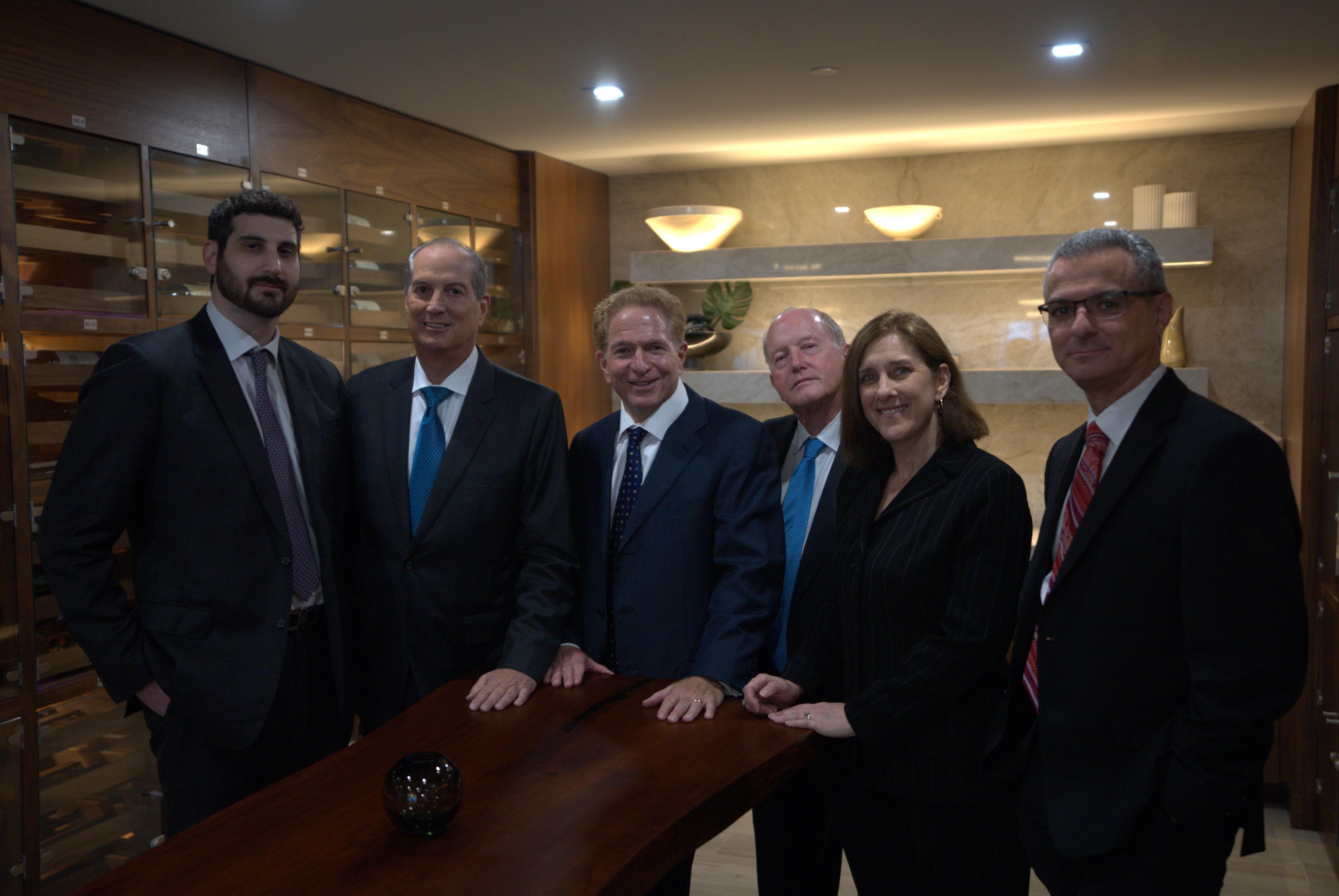
How experienced is the firm? +
Our attorneys have over 200 years of combined litigation experience and have managed more than 8,000 cases. The Firm has recovered over $800 million on behalf of its clients. Each of our attorneys averages over 30 years of experience.
Do you offer free consultations? +
Yes. We offer free, confidential initial consultations for both personal injury and commercial litigation matters. Call any of our three offices or submit the contact form on this site to schedule one.
Fees & Costs
How do contingency fee arrangements work? +
Under a contingency fee arrangement, the Firm only collects a fee if we recover money for you. The fee is a percentage of the recovery, agreed upon in writing before we begin work. Most personal injury matters are handled this way, with the Firm advancing case costs, so there is no out-of-pocket cost to you unless we obtain a recovery.
Do commercial litigation cases use contingency fees too? +
Often, yes. The majority of our cases on behalf of clients filing lawsuits or arbitration claims now involve at least a partial contingency fee relationship. This reduces the client's out-of-pocket obligations while creating a win-win opportunity for both client and lawyer.
Can I afford to hire your firm if I have limited resources? +
In most personal injury matters and many commercial cases, you can. Contingency fee structures and partial contingency arrangements mean that out-of-pocket expense is reduced or eliminated. We discuss the fee structure in your free consultation so you understand it fully before any engagement.
Personal Injury
What is the statute of limitations for personal injury claims in Florida? +
For most negligence-based claims arising on or after March 24, 2023, Florida law provides a two-year statute of limitations from the date of the incident. Wrongful death claims also have a two-year limit. Medical malpractice has a two-year limit running from the date the injury was discovered (or reasonably should have been discovered), generally capped at four years from the incident itself. Time limits are strict — speak to a lawyer as soon as possible after an injury.
What should I do immediately after a car accident in Florida? +
Seek medical attention even if you feel uninjured — some injuries surface later. Call the police and obtain a crash report. Photograph the scene, vehicles, and any visible injuries. Get contact and insurance information from all parties and witnesses. Notify your own insurance carrier of the accident, but do not give a recorded statement to any insurance company before consulting an attorney. Florida is a no-fault state with PIP coverage, but serious injuries often warrant pursuing the at-fault driver beyond PIP.
Should I talk to the insurance company before hiring a lawyer? +
Be cautious. Insurance adjusters frequently ask injured people to give recorded statements, sign blanket medical releases, or accept early settlement offers — often before the full extent of an injury is known. These steps can affect or jeopardize your claim. We urge clients to contact us before speaking with any insurance company, including their own.
How long does a personal injury case take to resolve? +
It varies considerably with the facts. Cases that settle pre-suit may resolve in a few months. Cases that require litigation typically take 12–24 months. Complex cases with extensive discovery, multiple defendants, or expert testimony can take longer. Our priority is recovering the full value of your claim, not the fastest possible settlement.
How is the value of a personal injury case determined? +
Recoverable damages typically include medical expenses (past and future), lost earnings and earning capacity, property damage, and non-economic losses such as pain and suffering. The case value depends on the severity of injuries, the strength of liability evidence, the available insurance and assets of the at-fault party, and how well the case is prepared and presented. Past results do not guarantee future results.
Commercial Litigation
What is "complex commercial litigation"? +
Complex commercial litigation refers to business disputes that involve substantial damages, multiple parties, intricate factual or legal issues, or specialized subject matter — for example securities, accounting, partnership, fiduciary-duty, or professional malpractice claims. These cases often require extensive discovery, expert witnesses, and significant pre-trial preparation, which is the kind of work the Firm has built its practice around.
When should I consider arbitration instead of going to court? +
Arbitration is often required by a contract clause — for example in employment agreements, brokerage account agreements, or partnership agreements. Where it is optional, arbitration can offer faster resolution, lower cost, and confidentiality compared with court proceedings, though it usually limits appeal rights and discovery. We handle disputes both in court and before private arbitration panels, including FINRA.
What is the difference between professional negligence and malpractice? +
They generally mean the same thing. "Malpractice" is professional negligence — a licensed professional's failure to meet the standard of care expected of their profession, resulting in damages. The terms are used interchangeably for attorneys, accountants, doctors, and similar professionals. To prove a malpractice claim, you generally need to establish duty, breach, causation, and damages.
Do you represent both plaintiffs and defendants? +
Yes. The Firm handles complex commercial, business, and financial disputes on behalf of both those filing lawsuits or arbitration claims and those defending against them.
Getting Started
How do I start working with the Firm on my matter? +
Call any of our three offices, or submit the contact form on this site to request a free consultation. We will discuss the facts of your matter, the relevant law, potential strategy, and the proposed fee arrangement before you commit to anything. All initial consultations are confidential.
What information should I bring to my consultation? +
Bring whatever documents or records you have related to the matter — for personal injury, this might include the police report, medical records, photographs, and insurance information. For a commercial matter, bring relevant contracts, correspondence, financial records, and any prior legal filings. If you are not sure what is relevant, bring whatever you have and we will sort through it together.
What if I am located outside South Florida? +
We represent clients throughout the State of Florida. Our three offices give us coverage across South Florida and the Orlando area, and we routinely handle matters requiring travel to other Florida courts. Contact the office most convenient to you and we will take it from there.
The information above is general and not legal advice. Every case is different, and outcomes depend on specific facts and law. For advice about your particular situation, contact us for a free consultation.